
What is the Temperature Humidity Vibration Combined Test Chamber(3-in-1 Combined Environmental Test Chamber)? – A Clear Explanation for Non-Engineers
Let’s start with the name: What does “Three-in-One” mean?
The term “Three-in-One” may sound technical, but it’s actually quite simple.
“Three” refers to three test conditions: Temperature + Humidity + Vibration.
“Combined” means testing them simultaneously or in sequence — not separately.
So, a Three-in-One Test Chamber = a chamber that controls temperature and humidity + a shaker that vibrates up/down or left/right.
When these two work together, they can simulate the complex environments products face in the real world.
Simply, it’s a testing device that simultaneously simulates three environmental stresses: temperature, humidity, and vibration.
| Parameter | Typical Range |
| Temperature | -70°C ~ +150°C |
| Humidity | 10% ~ 98% RH |
| Vibration | Sine, Random, Shock, Road Spectrum |
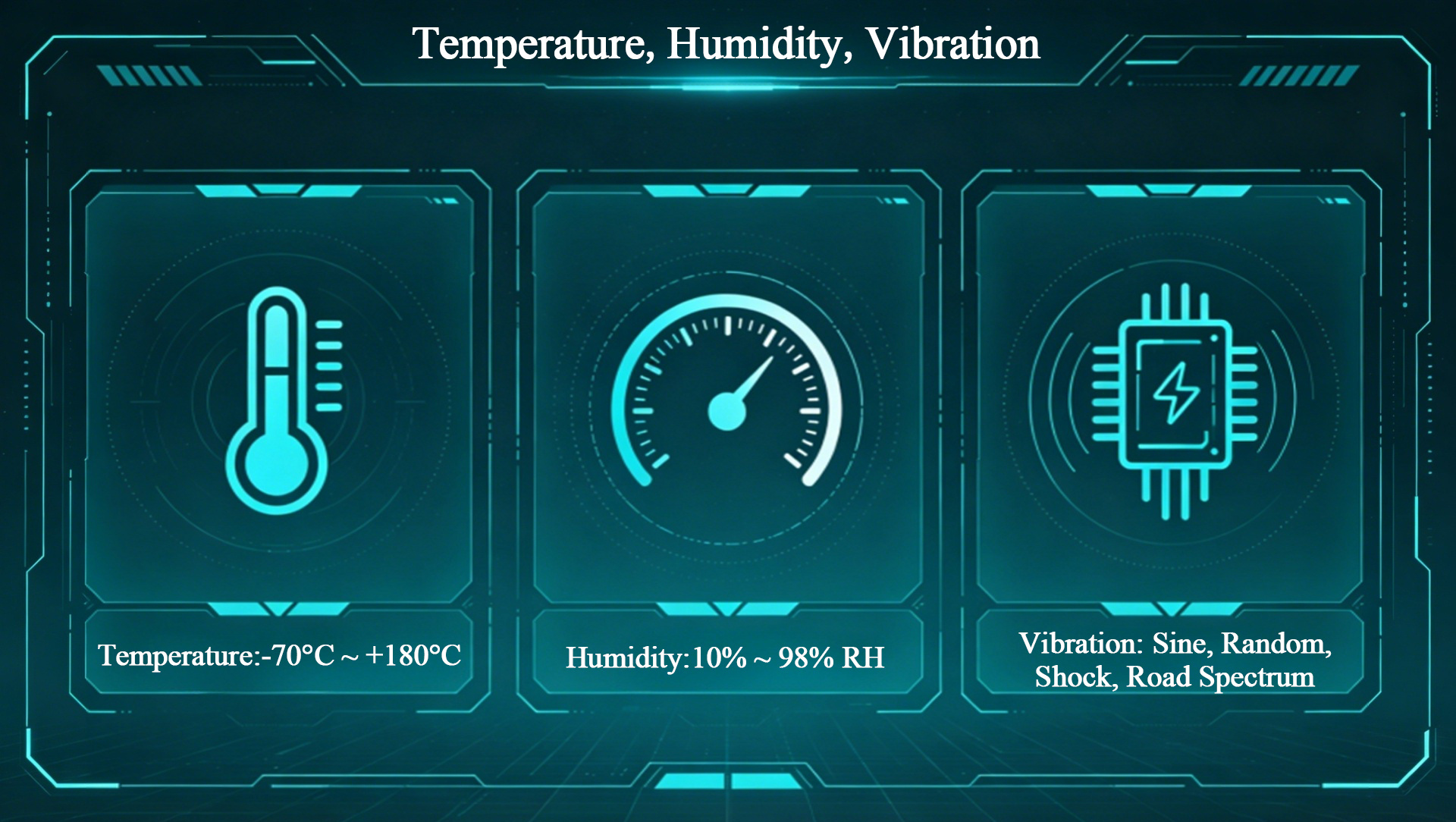
All three can be controlled independently, and more importantly – run simultaneously in a synchronized manner. This is the key difference from a standard temperature-humidity chamber or a standalone vibration shaker.
Think of it this way:
Individual tests are like taking Chinese, Math, and English separately
Triple combination is like a comprehensive exam – much closer to real combat
Why do we need combined testing? — Because the real world is not a single environment
Think about these scenarios:
Your phone is navigating outdoors in summer — the sun makes it hot (high temperature), then a rainstorm hits (high humidity), and you’re running, so the phone keeps shaking (vibration).
A sensor inside a car engine bay — freezing in winter (low temperature), nearly boiling in summer (high temperature), and the car is constantly vibrating (vibration).
An airplane flying at high altitude — minus 50°C outside (low temperature), and the airframe plus internal equipment are continuously subjected to turbulence (vibration).
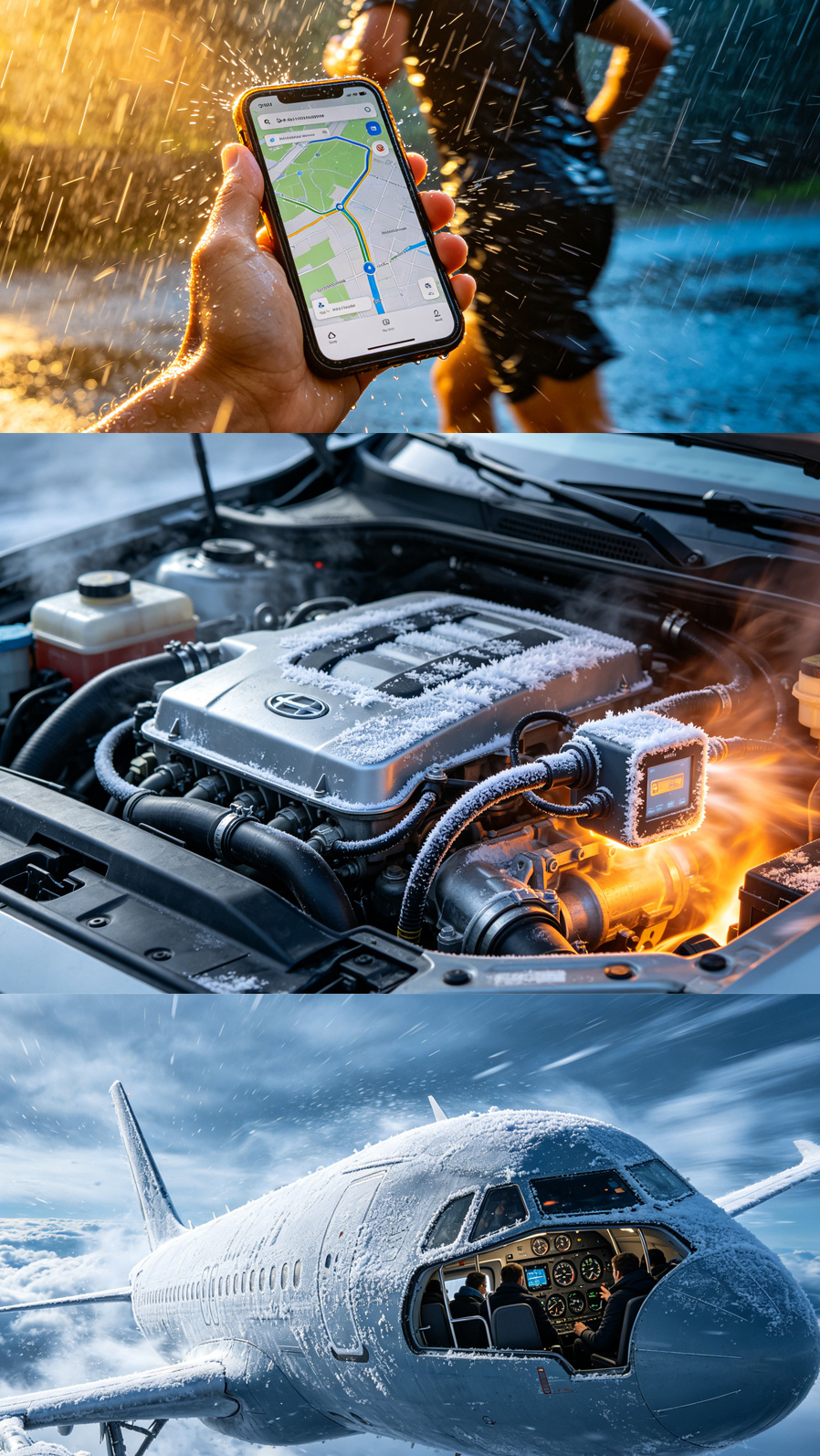
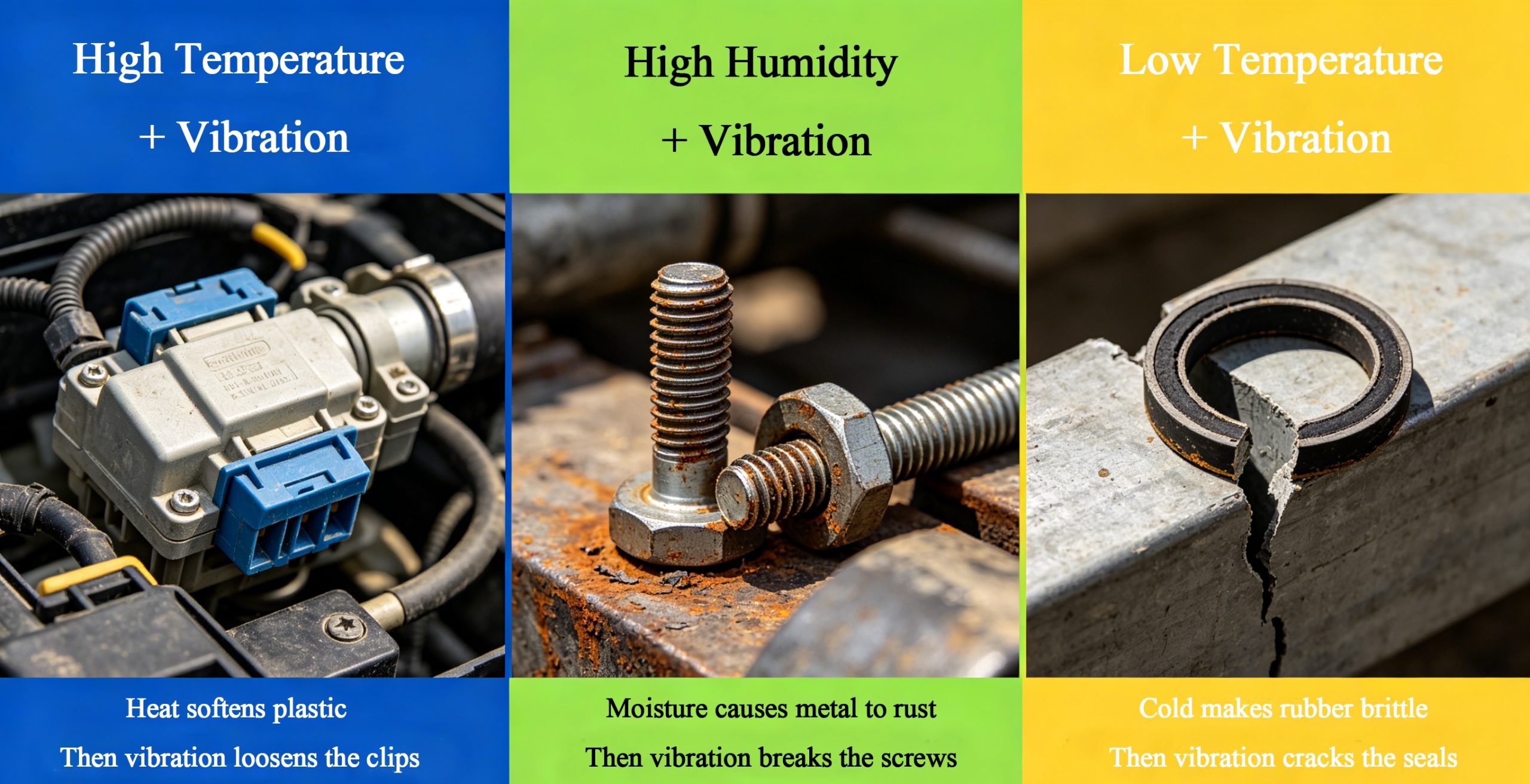
If you test high temperature, high humidity, and vibration separately — everything might pass. But when all three happen together, problems can show up. For example:
High temperature softens plastic → add vibration → a clip comes loose.
Humidity rusts metal → add vibration → a screw breaks.
Low temperature makes rubber brittle → add vibration → a seal cracks.
What Pain Points Does It Solve?
| Traditional Approach | Triple Combination Chamber |
| Separate chambers for temp, humidity, vibration – sample moved multiple times | One machine does it all – sample never moved |
| Cannot simulate real scenarios like “high temperature + vibration simultaneously” | All three stresses applied together, realistically replicating use conditions |
| Long test cycles, high labor costs | Completed in one run – 50%+ efficiency gain |
| Hidden defects hard to detect | Combined stresses more likely to trigger complex failure modes |
One sentence summary: It helps you find the “bugs that single tests will never catch.”
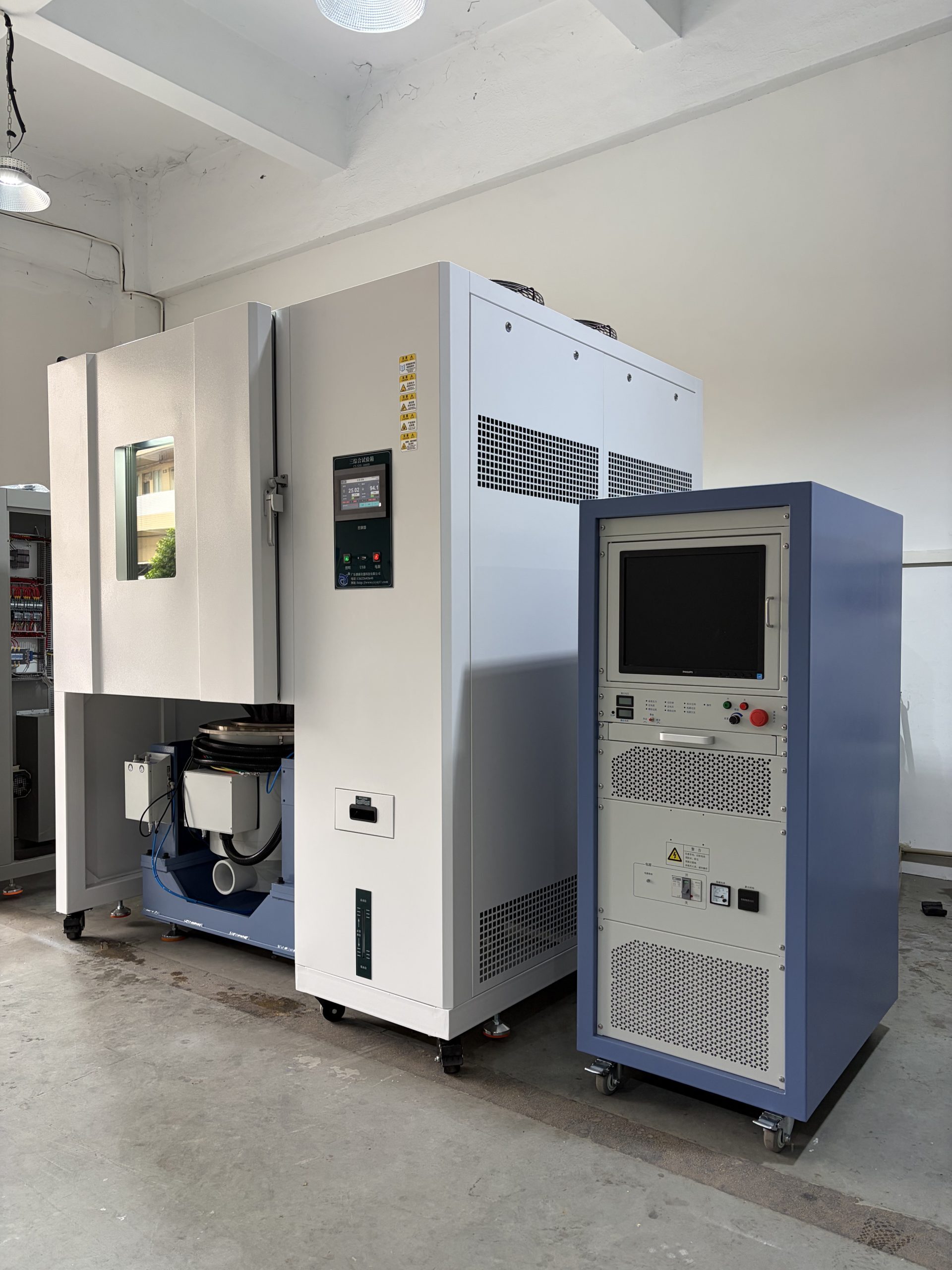
What does a Three-in-One Test Chamber look like?
Imagine it as a combination of a “super oven” plus a “powerful massage chair”.
Top part / Chamber
This chamber can get very cold (as low as -70°C) or very hot (as high as +150°C), and can also create humid conditions (like a sauna). The product is placed inside this chamber.
Bottom part / Shaker
This base can vibrate the product up and down or left and right. The vibration can be as slow as a few times per second (low frequency) or as fast as several thousand times per second (high frequency). The intensity can also be adjusted.
Control cabinet / Controller
A touchscreen computer where engineers set the temperature, humidity, vibration pattern, and duration — then the machine runs automatically.
What can it measure? — Easy-to-understand indicators
| Deflection | Whether the product bends or warps under force and temperature |
| Crack/Breakage | Whether the casing, solder joints, or screws crack or break |
| Functional failure | Whether it still works normally when powered on |
| Intermittent connection | Whether the signal cuts in and out during vibration |
| Aging/Deterioration | Whether rubber, plastic, or seals become hard, brittle, or melted |
| Resonance point | At which frequency the product shakes the most — this frequency should generally be avoided |
Which products need combined testing? — They’re all around you
Almost any product that may encounter temperature change, humidity, and vibration at the same time during real use is a good candidate for combined testing.
| Category | Examples | Why it needs testing |
| Automotive electronics | Dashcams, parking sensors, car displays | Hot after summer sun, freezing in winter, constant road vibration |
| Consumer electronics | Phones, watches, headphones, laptops | Carried everywhere — exposed to weather and bumps |
| Home appliances | Washing machine control boards, AC outdoor units, fridge compressors | Heat, humidity, and their own internal vibration |
| Medical devices | Portable ECG monitors, ventilators, infusion pumps | May be moved with patients — sees temperature and humidity changes |
| Aerospace | Avionics, drones, satellite components | Extreme cold at high altitude, intense vibration, pressure changes |
| Military | Tactical radios, night vision goggles, radar units | Harsh outdoor environments + vibration from transport/movement |

Triple combination chambers mainly serve industries with extremely high reliability requirements:
| Industry | Typical Products | Primary Stress Combination |
| Automotive Electronics | ECU, displays, sensors | High temperature + Vibration |
| Aerospace | Avionics, gyroscopes | Rapid temperature change + High-frequency vibration |
| Consumer Electronics | Smartphones, drones, wearables | Damp heat + Transport vibration |
| Military Equipment | Ship/vehicle weapon systems | Thermal shock + Vibration |
| New Energy | Battery packs, charging stations | Temperature-humidity cycle + Road simulation |
Supported by international standards: ISO 16750, MIL-STD-810G, GB/T 2423, IEC 60068 all explicitly require triple combination testing solutions.

Triple Combo vs Other Test Solutions
To help you better understand where the triple combination chamber fits, here’s a comparison table:
| Test Solution | Simulated Stresses | Realism Rating | Typical Applications |
| Single-parameter chamber | Temperature OR Humidity | ★☆☆☆☆ | Component screening, incoming inspection |
| Temperature-Humidity chamber | Temperature + Humidity | ★★☆☆☆ | General electronics, home appliances |
| Standalone vibration shaker | Vibration | ★☆☆☆☆ | Transport simulation, structural resonance testing |
| Triple combination chamber | Temp + Humidity + Vibration (synchronized) | ★★★★★ | Automotive, military, aerospace, high-reliability products |
Key advantages:
Stress coupling effect – Temperature changes cause material expansion and contraction. When vibration is added on top, failure probability for solder joints, connectors, and PCBs rises exponentially – exactly what happens in the real world.
Time and cost savings – An 8-hour triple combination test, if split into separate temperature-humidity and vibration tests, would likely take over 24 hours (including sample transfer, temperature stabilization, and fixture changes).
More realistic failure modes – Single tests often produce “lab-specific” failure patterns that don’t match field conditions. Triple combination generates failure modes that closely align with user feedback.
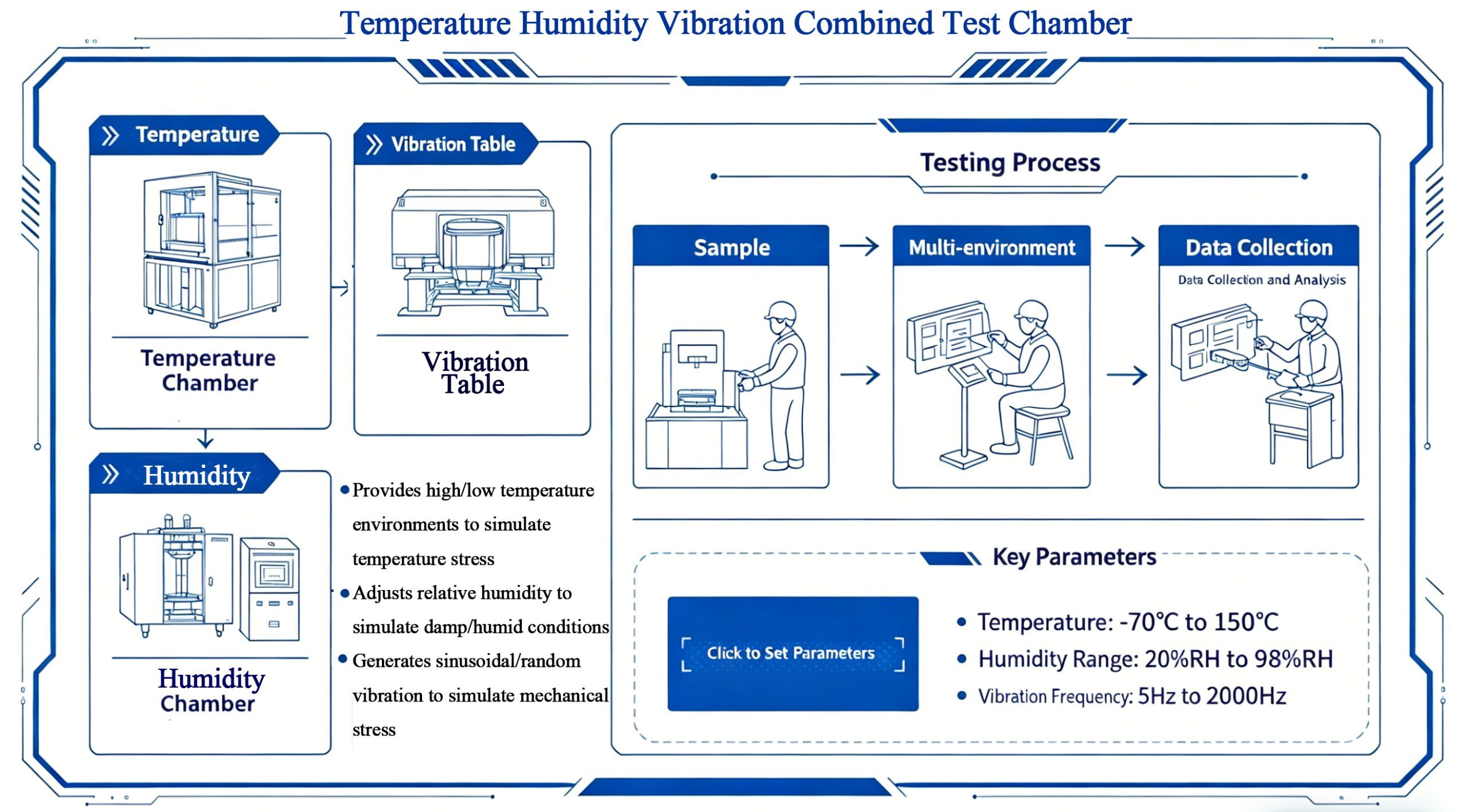
How does combined testing work? — Step by step
A typical combined test process looks like this:
Sample Preparation
Mount the product to be tested (e.g., an automotive sensor) onto a dedicated fixture in the same way it would be used in practice, and place it inside the test chamber.
Setting Conditions
The engineer sets the following parameters on the controller:
– Temperature cycling from 25°C down to -40°C, then up to 85°C (simulating winter startup to summer exposure)
– Humidity set to 95% (simulating rainy or damp conditions)
– Vibration set to random vibration (simulating real road bumps)
– Test duration: 8 hours
Starting the Test
The equipment runs automatically. During the test, the product’s operation can be monitored in real time (e.g., checking whether the signal is normal when powered on).
Inspection and Recording
After the test, remove the product and inspect its appearance (for cracks, deformation), functionality (whether it still works), and internal components (solder joints, screws, etc.).
Pass/Fail Criteria
If the product shows no issues in function or structure during and after the test, it is considered a pass. Otherwise, the design must be improved and the test repeated.
Core components of a Three-in-One Test Chamber
To keep the machine running stably and reliably, it includes several key parts:
| Component | Function | Simple analogy |
| Compressor | Cooling | Like a refrigerator |
| Heater | Heating | Like a space heater |
| Humidifier/Water pan | Produces steam to raise humidity | Like a humidifier or boiling water |
| Shaker armature | Generates vibration | Like a loudspeaker cone, but much more powerful |
| Power amplifier | Amplifies control signal to drive the shaker | Like a home theater amplifier |
| Sensors | Check temperature and vibration accuracy | Like a thermometer + vibration meter |
| Controller | The brain of the whole system | Like a dedicated small computer |
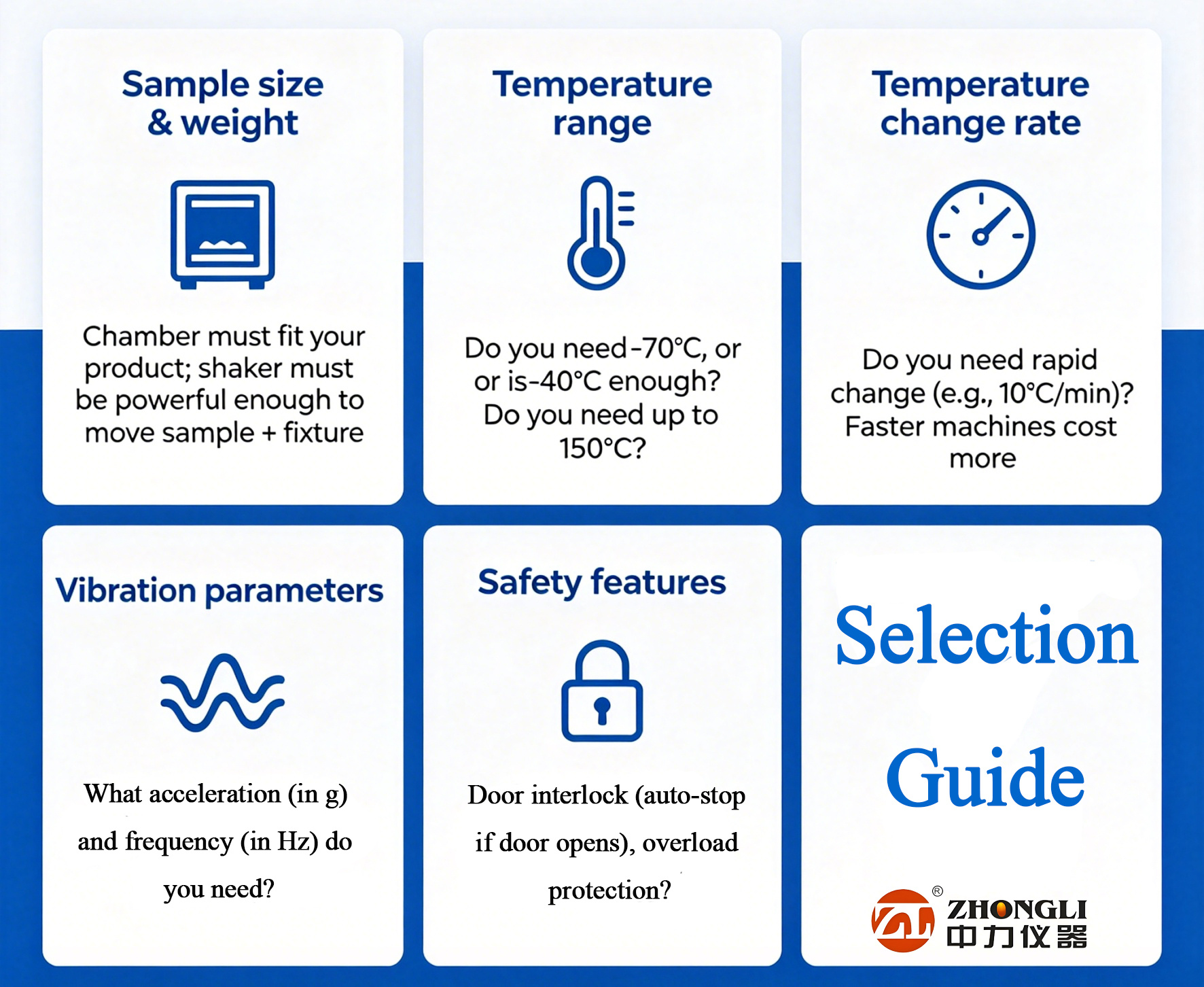
Key points when selecting a Three-in-One Test Chamber (for procurement or engineers)
Common Misconceptions vs Truths
| Misconception ❌ | Truth ✅ |
| Any temperature chamber placed on a shaker becomes triple combination | Requires dedicated sealing bellows, insulated adapter plate, and reinforced structural design |
| Bigger vibration and faster temperature change are always better | Over-stressing causes “over-kill failures” – follow real environment or standards |
| Triple combination can replace all single tests | Triple combo is a supplement, not a replacement – both together give complete validation |
| Any shaker can work with any temp-humidity chamber | Triple combo shakers require temperature-resistant (-70°C to +180°C) coils and sensors |
| Samples can be removed immediately after test | Wait until chamber temperature approaches room temperature – prevents condensation, burns, and protects samples |
Summary: Remember it in one sentence
For manufacturers, it’s a quality safety gate.
For consumers, it’s the reason products are durable and reliable.